
Ready to Level Up Your Leadership?
Great leaders don’t just lead—they adapt. Whether you’re managing a team, working with clients, or even collaborating with friends on a project, understanding different personality types can make all the difference.
Let’s talk about how tweaking your approach can improve relationships, boost teamwork, and make leadership feel more natural.
Why Personality-Based Leadership Works
Ever tried giving instructions to someone who loves structure and details, only to get frustrated when they overthink it? Or maybe you’ve worked with an ultra-social person who thrives on ideas but struggles with follow-through. That’s the magic (and challenge) of different personality styles!
Knowing how people tick helps you communicate better, build stronger connections, and get real results.
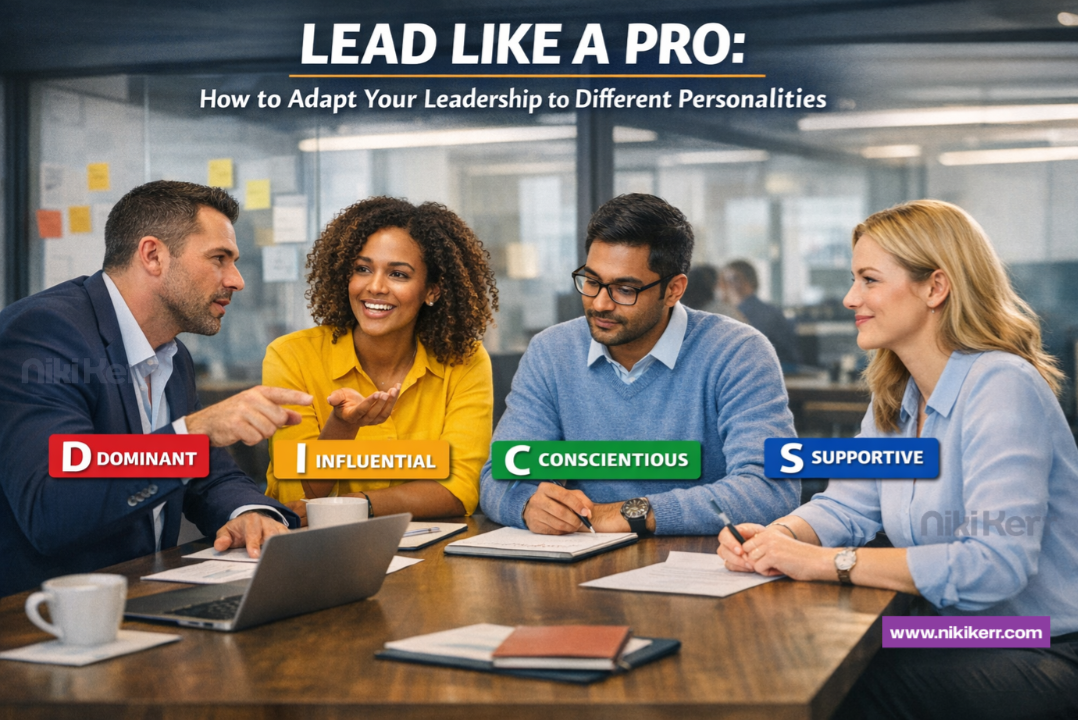
Let’s break it down using the DISC personality model:
How to Lead Different Personality Types
Leading D Types (Dominant / Doers)
D-types are driven, fast-paced, and love a challenge. They don’t need hand-holding—they want efficiency and results.
- Keep it straight to the point—no fluff, just facts
- Set clear expectations and focus on goals
- Give them autonomy—they don’t love being micromanaged
- Offer solutions quickly so they can take charge
Leading I Types (Inspirational / Introducers)
I-types are social, high-energy, and thrive on connection. They love new ideas and excitement—but can lose focus if things get too rigid.
- Keep the conversation lively and engaging
- Encourage brainstorming and creativity
- Recognize their efforts—they love feedback
- Build genuine relationships to keep momentum going
Leading S Types (Steady / Supporters)
S-types value stability, trust, and teamwork. They aren’t looking for drama—just a supportive space to do their best work.
- Create a trusting, stable environment
- Offer consistent support so they feel secure
- Give them time to share their thoughts comfortably
- Build long-term relationships, not just quick wins
Leading C Types (Conscientious / Careful)
C-types are analytical, detail-oriented, and love structure. They thrive when they have time to think things through.
- Set clear expectations with data-driven reasoning
- Provide detailed plans—they love the details!
- Let them process information before making decisions
- Be precise and structured in communication
Adapting Your Leadership Style = Stronger Teams & Better Results
Great leadership isn’t about sticking to one approach—it’s about knowing what works best for different people. When you adjust how you lead, you create better conversations, deeper connections, and stronger collaboration.
So next time you’re leading a project or working with a team, take a step back and ask yourself—how can I tweak my approach to make this work better for everyone involved?