
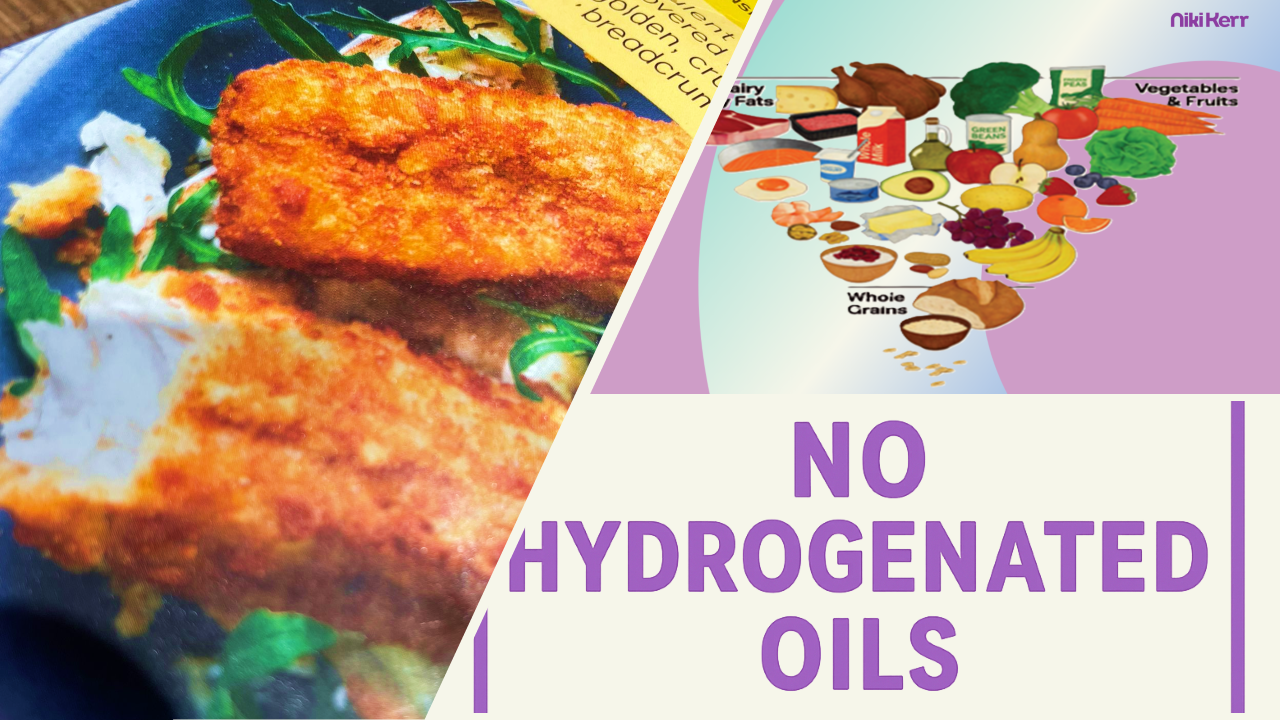

When I recently read a warning about “trans fats in frozen food” on a major health brand’s website, it was a reminder of how easily outdated ideas are repackaged as modern guidance.
:
The claim that sparked this article
I was genuinely shocked to read the following statement on the website of a well‑known national health company:
“Avoid ultra‑processed trans fats found in frozen foods, takeaways, cakes, sweets and crisps.”
It sounds authoritative. It sounds scientific, and blends well with trending noise, but it quietly bundles together several very different nutritional issues — and in doing so, it gets the facts wrong.
And this matters, because people trust these sources.
Let’s start with trans fats
And this is something very close to my heart – not because of any health issues of my own, rather that in the mid 90’s I led a peer presentation on the very matter for my Uni class at Kings.
We already knew that industrial trans fats had the potential to become a serious public health problem. They were widely used in margarines, baked goods and fast food because they extended shelf life and improved texture.
We now know they significantly increase the risk of heart disease. That’s why legislation stepped in.
The UK ban (2021)
In the UK (following EU law), strict limits were introduced in April 2021:
No more than 2 grams of industrial trans fat per 100 grams of fat in any food product.
That’s a maximum of 2% of total fat content. This effectively removed industrial trans fats from the mainstream food supply.
So when a website in 2026 warns people to “avoid trans fats in frozen foods and cakes”, it’s relying on an outdated narrative. The regulatory landscape has already changed.
Are trace amounts still present? Yes — but at levels so low they are no longer considered a population health risk.
What is a trans fat?
1. It starts as a natural oil Sunflower, soybean or rapeseed oil — naturally liquid at room temperature because the fat molecules are kinked and flexible
⬇️
2. It’s heated and chemically altered: Under high heat, pressure and hydrogen gas, the fat molecules straighten. This “partial hydrogenation” changes their shape and behaviour.
⬇️
3. You end up with a trans fat A solid, shelf‑stable fat with a molecular structure the body doesn’t easily recognise.
Why this is a problem?
This is the key point — it’s not just about calories. Trans fats damage health because they interfere with cell membranes.
Your cells are wrapped in a fatty outer layer (a membrane) that needs to stay flexible to work properly.
Trans fats
- Make cell membranes stiffer and more fragile
- Disrupt how cells communicate
- Increase inflammation
- Raise LDL (“bad”) cholesterol
- Lower HDL (“good”) cholesterol
In simple terms:
Trans fats don’t just sit in the bloodstream — they become part of your cells and make them work badly.
That’s the science. And it’s exactly why legislation removed these fats from our food supply.
Frozen food is not the villain
The next problem with the advice is this line:
“…found in frozen foods, takeaways, cakes, sweets and crisps.”
This lumps frozen food into the same category as sweets and crisps. Which makes no nutritional sense. Frozen vegetables. Frozen fish. Frozen fruit. Frozen ready meals with balanced ingredients are not generally ‘bad’ for you, freezing is a preservation method, not a marker of poor nutrition.
In many cases, frozen produce retains nutrients better than fresh food that has travelled for days. So suggesting that “frozen foods” are a source of harmful trans fats is misleading at best — and fear‑inducing at worst.
Ultra‑processed food is a separate issue
There is a serious and legitimate concern about diets high in ultra‑processed foods.
These foods tend to be:
- High in refined starches and sugars
- Low in fibre
- Easy to overconsume
- Designed for convenience rather than nourishment
But this is not the same as saying they contain trans fats.
The risk comes from:
- Excess calories
- Poor nutrient density
- Displacement of real meals
Not from industrial trans fats that were legislated out of existence five years ago.
When advice blurs these distinctions, it creates confusion rather than clarity.
A more truthful version of that advice would be:
Industrial trans fats have been largely removed from UK foods since legislation in 2021. What matters more for health is limiting diets dominated by highly refined, low‑fibre foods and prioritising whole, balanced meals — whether fresh or frozen.
Less catchy. But far more honest.
The takeaway
Be careful where you get your nutrition advice from — even when it comes from reputable brands. Because confidence does not equal correctness. And simple slogans often hide sloppy science.
Nutrition is complex. Public trust depends on precision. And we should expect better from those who claim to educate.
References
- UK Government (2024) Nutrition legislation information sheet.
- NICE (2014) Expert testimony on trans fatty acids.
- Briggs, A., Scarborough, P. & Rayner, M. (2015) BMJ, 351, h4583.
- WHO (2018) REPLACE: Eliminating industrial trans‑fatty acids.
- American Heart Association (2017) Circulation, 136(3), e1–e23.